Korea Herald correspondent
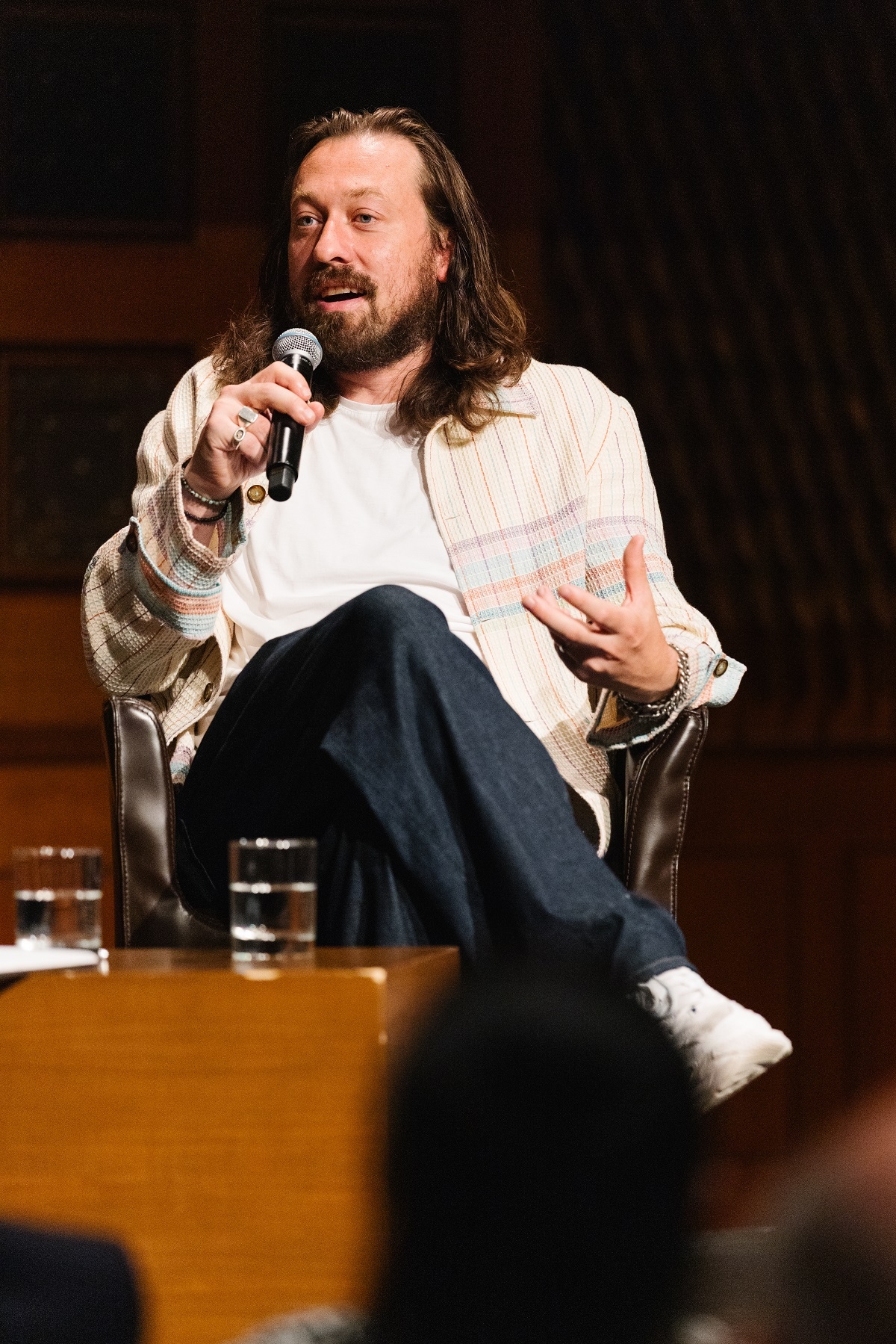
NEW YORK — For Australian director Simon Stone, "The Cherry Orchard" was an odyssey born of a combination of things that might have seemed unlikely: a Korean-film obsessive, an Australian director raised in Europe and a long-held dream of working with Korean actors.
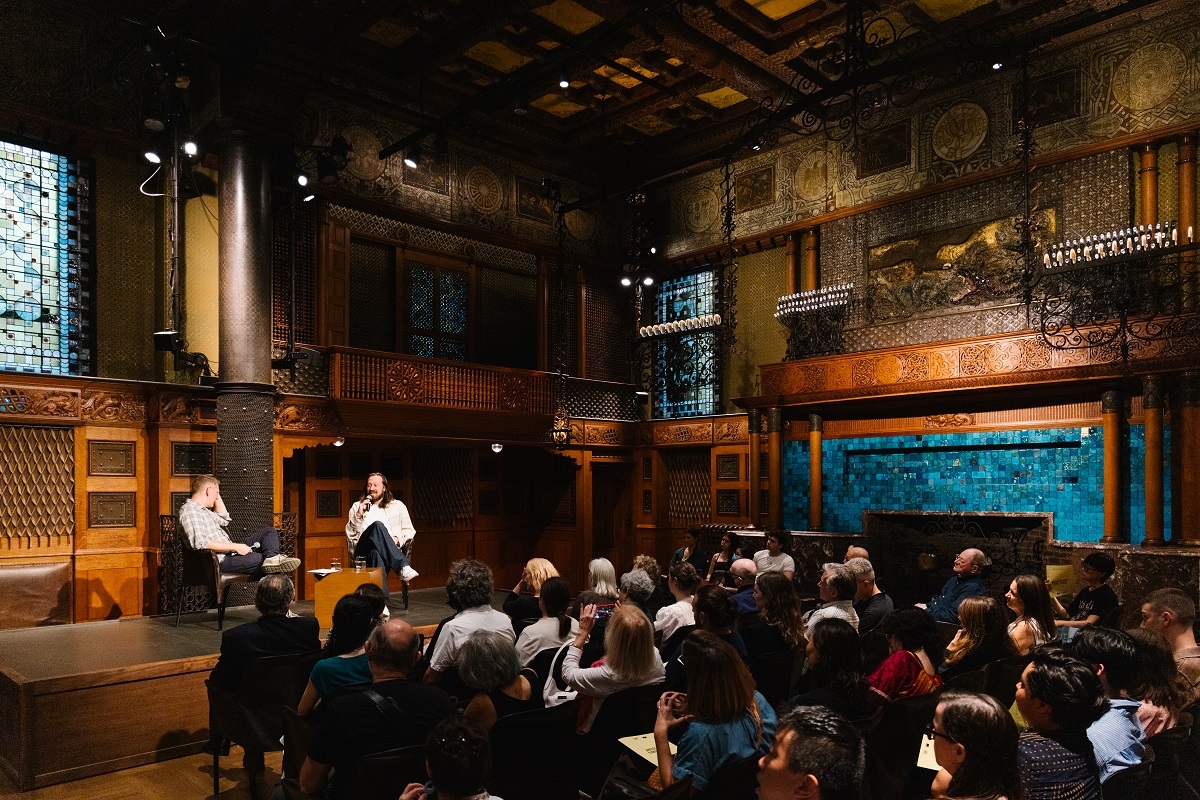
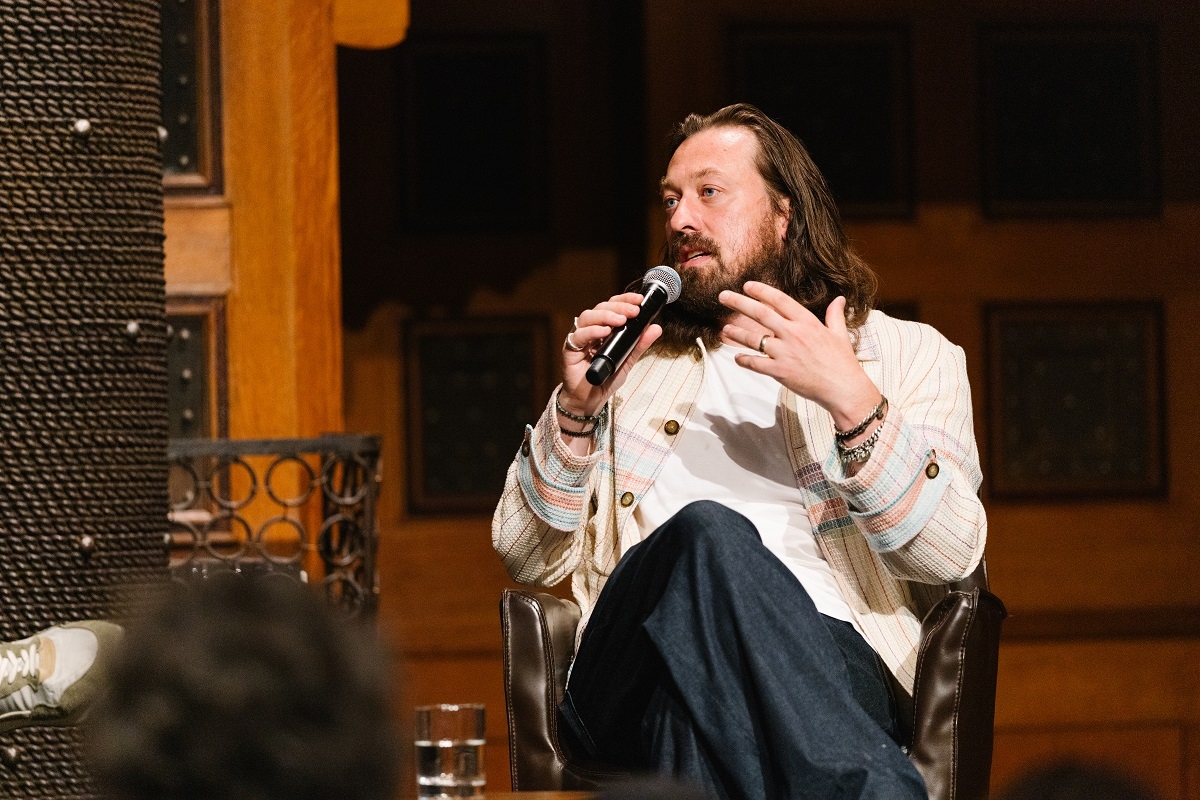
At an artist talk at Park Avenue Armory on Thursday, Stone described the journey from his fascination with Korean cinema to the 2024 Seoul premiere of his Korean-language reimagining of Anton Chekhov's classic as something close to a homecoming.
"The Cherry Orchard" was, he said, "a nerd's dream come true."
Stone, who moves between theater, film and opera, first became fascinated with Korean actors through Korean cinema. Around 2017 and 2018, he went through a period of near-obsession, watching four or five Korean films a day.
"There was a period in my life where I was watching Korean films quite addictively," he said. "My wife says, retrospectively, you disappeared for those months."
He began looking up the actors he saw on screen and discovered that many also had extensive theater experience.
"I remember sitting there thinking, maybe I could -- like magic -- have an opportunity to go to Korea and direct some of these people. Because I searched the actors and some of them had done a lot of theater, and I was like, maybe they want to do theater with me."
Stone said he was particularly drawn to the way Korean actors portray pain and vulnerability, even within the heightened world of action films.
"I'll always use this as an anecdote about Korean actors. In Korean action films, the main character — the Bruce Willis guy, the Vin Diesel guy, the Dwayne Johnson guy — will fall off a building and hurt himself so badly on the way down," he said.
"He won't get up and brush it off and keep running. He'll eventually get the bad guy, but he has the kind of pain that we all do as human beings on the way there."
"I love this view of humanity," he added, describing a quality in which familiar character types can be "completely upended in ways that you couldn't possibly imagine."
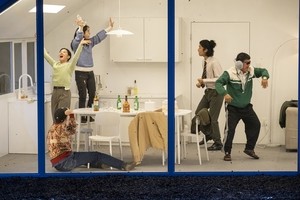
Stone's long-imagined opportunity became real when he began working with LG Arts Center. The result was "The Cherry Orchard," which premiered in Seoul in 2024 with Jeon Do-yeon and Park Hae-soo.
"I write for the actors I meet," Stone said. A production, he explained, emerges from the interplay of three things: the classic he has chosen to rewrite, his fascination with the actors he is writing for and what is happening in the world that needs to be talked about.
"Between those three poles the play takes place. The story from the beginning, the actors and their energies and the way that they excite me, and what is happening in the world right now that must be spoken about.
"If my writing is ever bad, I want the actor to be so fascinating that they could polish a turd. So I choose people who are inherently interesting," he added.
Stone transposes Chekhov's 1904 play to modern-day Seoul, following a wealthy Korean chaebol family whose values and way of life are increasingly challenged by rapid social change.
Chekhov was not an arbitrary choice. Stone saw a connection between the Russia of Chekhov's time and modern Seoul, particularly in their shared sense of uncertainty about national identity and the future.
"Russian people have, throughout history, kept being very insecure about what their future is and who they are as a nation," Stone said.
"That's something I recognized very much in Korea — Who are we? Why are we doing what we're doing? We want to be proud of who we are, but do we mean anything on the world stage?"
Stone said that question has become particularly interesting as Korea's cultural influence has expanded globally.
"Everyone's talking about Korea at the moment, and yet it's a culture which is still quite insecure about itself and what it means in a larger sense," he said. "That's really interesting because it's exactly what happened in Paris in the '20s. It's exactly what happened in Hollywood in the late '60s and '70s."
"And then you come here and realize, oh wow, this is deeply meaningful to a lot of people — not just to the nerd who was sitting in his room watching all those Korean movies."
hwangdh@heraldcorp.com